LAST UPDATED: FEBRUARY 9, 2025 | TRAVEL DATES: MAY 2024 | EST. READING TIME: 26 MIN
IN THIS GUIDE ✺
Day 1
Day 2
Day 3


Does anything sound better than relaxing in a ryokan wearing a yukata robe?

A traditional Japanese haven straight out of an anime, Kyoto is a portal through time back to the era of samurais and shoguns. Relax upon the tatami mats inside a ryokan, submerge yourself in a steaming onsen, or sip matcha within a wooden tea house—the possibilities are endless!
While cities like Tokyo represent the Japan of tomorrow, Kyoto is firmly rooted in the past to ensure the otherworldly beauty of yesterday is not lost. Stroll alongside maiko and geiko in geisha-filled Gion to feel the pulse of the entertainment district, while the dense bamboo forests of Arashiyama invite the contemplative reflection encouraged by Zen Buddhist ideals permeating spiritual sites across the city.
No matter how you revel in this bygone era, the tranquil magic of authentic Kyoto is apparent.
3 Days in Kyoto Itinerary
In a hurry? Here’s a time-stamped overview of the comprehensive 3 days in Kyoto itinerary detailing the best things to do in Kyoto you’ll find below:
Day 1
6:00 - 8:08 AM: 🚅 Ride the Shinkansen bullet train from Tokyo to Kyoto (2 hr 8 min)
9:00 AM - 12:00 PM: 🍵 Start your day with a Kiyomizu-dera walking tour and matcha tea ceremony (3 hrs)
12:30 - 1:30 PM: 🍜 Enjoy a warm noodle lunch from Ramen Sugichiyo (1 hr)
1:45 - 3:00 PM: 🎏 Peruse the many street food and souvenir shops of Nishiki Market (1 hr 15 min)
3:00 - 4:15 PM: 🛏️ Return to your lodging to get properly settled and unpack your belongings (1 hr 15 min)
4:15 - 6:30 PM: ⚔️ Dress the part and learn to wield a katana at the Samurai Kenbu Theater (2 hrs 15 min)
7:00 - 9:00 PM: 🍱 Indulge with an omakase sushi dinner at Sushiiwa Kyoto (2 hrs)
9:00 - 10:00 PM: ♨️ Relax in the steamy onsen of the Solaria Nishitetsu Hotel (1 hr)
Day 2
9:00 - 10:30 AM: ✨ Tour the shiny gold Kinkaku-ji Temple bright and early (1 hr 30 min)
10:30 - 11:45 AM: 🗿 Head to the Otagi Nenbutsu-ji Temple to see thousands of Buddha heads (1 hr 15 min)
11:45 AM - 1:00 PM: 🎍 Stroll through the bamboo forest of Arashiyama (1 hr 15 min)
1:00 - 2:00 PM: 🍲 Dig into a vegetarian shojin ryori lunch at Shigetsu (1 hr)
2:00 - 3:00 PM: 💮 Saunter through the gardens and admire the Rinzai Zen Tenryu-ji Temple complex (1 hr)
3:30 - 5:30 PM: 🎴 Explore more of the traditional tea houses and machiya townhouses in Gion (2 hrs)
6:00 - 7:00 PM: 🎎 Watch a traditional geisha dance performance at Gion Corner (1 hr)
7:00 - 7:45 PM: 👨🏻🍳 Enjoy a bowl of ramen at the counter of Kyo Ramen Mitsuru (45 min)
7:45 - 8:30 PM: 🍶 Snag a can of beer or sake from a vending machine and walk by the Kamo River (45 min)
Day 3
8:45 - 10:30 AM: 👺 Hike the shrine walk from Mt. Kurama through to Kibune (1 hr 45 min)
10:30 AM - 12:00 PM: 🚞 Travel back to the Higashiyama ward of Kyoto (1 hr 30 min)
12:00 - 12:45 PM: 🩶 Stroll through the raked sand garden of the Ginkaku-ji Temple (45 min)
12:45 - 1:40 PM: 🌳 Wander down the Philosopher’s Path to the Nanzen-ji Temple (55 min)
1:40 - 2:00 PM: 🚕 Taxi south towards the Fushimi ward prior to the next excursion (20 min)
2:00 - 3:30 PM: 🍣 Craft a nigiri lunch in a sushi making class at the Umemori Sushi School (1 hr 30 min)
3:40 - 5:00 PM: ⛩️ Walk through the red torii gate tunnel at the Fushimi Inari Taisha shrine (1 hr 20 min)
6:30 - 9:00 PM: 🍤 Dig into a 10-course kaiseki tempura dinner at the Yoshikawa Inn ryokan (2 hr 30 min)
How to Get Around Kyoto?
WALK: Walking is the best way to go if the distance to your destination is 20-30 minutes—and who wouldn’t want to stroll by the charming wooden tea houses of Kyoto Japan? There are two routes detailed below which you should absolutely walk through; the Philosopher’s Path between Ginkaku-ji and Nanzen-ji and the stroll through the preserved streets of Arashiyama.
TAXI: Most notable tourist spots have designated taxi drop-off areas, so you know there’ll be a fresh supply when you depart. Otherwise, request a cab in the hotel lobby or call one on Uber to see the estimated wait time and duration up front. The base fare for taxis in Kyoto is ¥490, with an additional charge of ¥320 per kilometer during the day. The vast majority of taxis accept credit cards as a payment method—which a screen attached to the back of the passenger’s seat confirms—and this nifty device can translate conversations between yourself and the driver!
-
As I regrettably learned during my first morning in Kyoto Japan—calling a taxi when it’s raining can be nearly impossible.
My hotel quoted a 30 minute wait, Uber wouldn’t connect me with a car at all, and every cab I tried to hail was already full or pre-reserved.
I nearly missed my MagicalTrips walking tour due to this transportation struggle, so plan ahead if you’re commuting during a rainy day!
Other than that initial hiccup, I had an incredibly easy time hailing cabs in Kyoto.

TRAIN: The public transit in Kyoto—whether via above ground railways or the underground subway—is extremely efficient and the most affordable way to get from here to there! Add the Suica card to your digital wallet before hopping on a train, since this digital transit card allows you to scan your phone and walk through the station gates—it’s as simple as that!
Upload ¥1,000 during the initial set-up, then you can add specific amounts. On the last ride of your trip,check the price of your route in advance on a maps app and only add the cash needed to reach that exact amount—otherwise, you’ll have some inaccessible change left over in the end.
At home, I raved about how clear and simple the public transit signage is all over Japan. I’ve consistently gotten on the wrong train in New York City, yet didn’t make a single mistake in the Japanese stations that are numbered, colored, have unique line names, and explicitly list which stops the route will arrive at in either direction. All the announcements are also repeated in English! To follow general train etiquette, remain quiet and keep to yourself, avoid eating and drinking, and if wearing headphones listen at a volume that won’t leak noise.
BUS: Many of the same train principles apply to the bus system, with the notable exception being bus routes aren’t as precisely timed as trains, so don’t be alarmed if your bus is running late—especially if it’s raining! Some buses require you to insert coins rather than pay electronically. If this is expected, there will be two slots in the machine—one to insert payment and another to break down large coins and bills into smaller ones if you don’t have the exact fare on hand.
How to Get from Tokyo to Kyoto?
FROM: Tokyo Station (1 Chome Marunouchi, Chiyoda City, Tokyo 100-0005, Japan)
TO: Kyoto Station (Higashishiokoji Kamadonocho, Shimogyo Ward, Kyoto, Japan)
TRANSPORTATION: Nozomi bullet train on the Tokaido-Sanyo Shinkansen line (2 hr 15 min, 4 stops, ~$85)
The best way to reach Kyoto from Tokyo is via the shinkansen bullet train, or high-speed railways in Japan known for their comfort and speed. Using magnetic levitation to float and eliminate friction, these trains reach top speeds of nearly 200 mph while maintaining a remarkable safety record, having no passenger fatalities in over 50 years of operation.
To reach Kyoto, the Nozomi is the fastest train since it only stops at major stations with multiple departures per hour in each direction. Since time is money, why settle for anything less than the fastest option?
-
To book a ride, collect bullet train tickets at the Tokyo Station kiosks or pre-book a reservation online.
Even on the 6:00 AM train I took from Tokyo, the non-reserved cars seemed quite full, so if you’re on a tight schedule I recommend locking down your preferred train in advance.
Online choose between non-reserved and reserved seats in ordinary cars, or reserved seats in first class cars — which increase in price according to their class. DO NOT book your tickets via RailNinja, instead use Klook to save nearly $50 in ridiculous and unnecessary service fees.
After securing tickets online, you still need to pick up two physical copies from the shinkansen kiosks on the day of departure. This was quite a quick process with in-depth instructions and photo guidance provided by Klook, so no need to stress about this extra step!
Keep both your tickets, however, as you need to insert these in the destination station to exit the ticketed train area. If you end up losing these tickets like my friend did, save a copy of your digital purchase confirmation to show train station personnel who can help you exit the station.
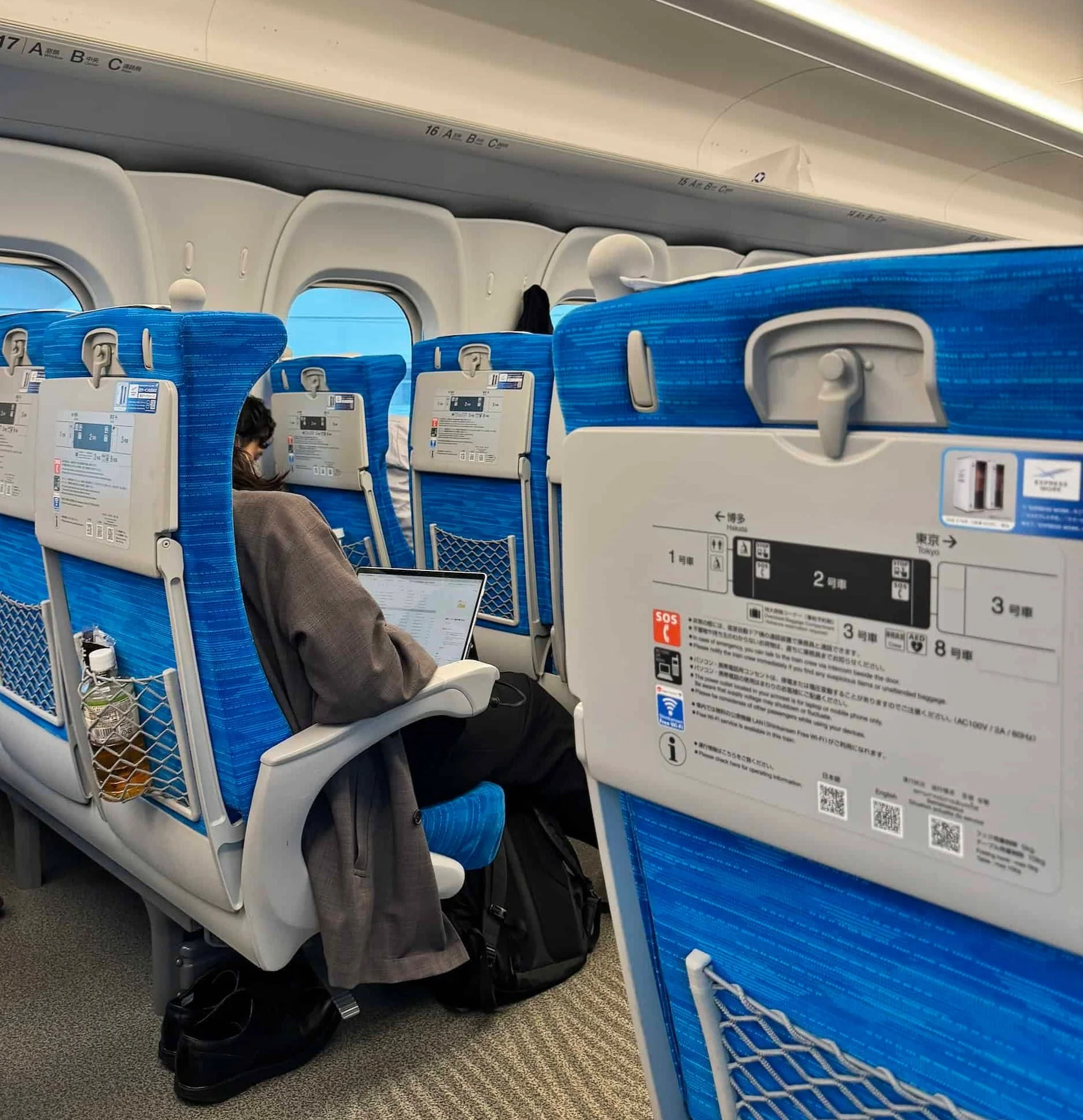
On the train, find fast free Wi-Fi, charging outlets, reclinable chairs with tray tables, and pretty much all the expected airplane fixings. Sit back, relax, and enjoy the ride as you cruise over to Kyoto!
Pro Tip:
On the ride over, sit on the right side of the train for a potential view of Mt. Fuji. The reverse goes for the way back; sit on the left to catch a glimpse of this notoriously elusive peak.
Where to Stay in Kyoto?
REASONABLE ROOM: Solaria Nishitetsu Hotel Kyoto Premier (luxuriously large room in hotel with onsen, $295.52 for 2 nights split among 2 people)
RELAXING RYOKAN: Yoshikawa Inn (traditional Japanese ryokan with zen garden and famous tempura restaurant, $861.04 for 1 night split among 2 people)
Solaria Nishitetsu Hotel Kyoto Premier
I was absolutely stunned at how nice the Solaria Nishitetsu Hotel Kyoto Premier was considering I paid less than $300 for a two-night stay—this was undoubtedly the best bang for my buck I got from any Japan accommodations!
Mere steps from the Kamo River, feel the relaxing natural aesthetic of this hotel as soon as you step foot into the lobby and admire the lush garden spanning the entire back wall. You absolutely cannot go wrong with this option when searching for hotels in Kyoto Japan, and from your arrival to departure you’re sure to feel the zen vibes of the city permeating every room of this establishment.
-
Find free refreshments in the room along with complimentary pajamas, robes, and slippers you can wear downstairs to enjoy the natural onsen!
The simple yet modern standard double room comes equipped with a spacious bathroom and tub, comfortable mattresses and pillows made with Hungarian white duck down, and supplies for preparing tea and coffee.
In addition to the indoor and outdoor baths, find a powder area in the basement with a range of beauty supplies akin to an Equinox changing room. There’s also a relaxation space next to the enclosed baths where you can chill out and enjoy a beverage.


Yoshikawa Inn
At least one night in Kyoto MUST be spent in a ryokan—I don’t make the rules! Jokes aside, this is one of the most authentic Japanese cultural experiences you can have, so if you splurge on nothing else I recommend a night in a ryokan be the one Japanese luxury you invest in.
I stayed at the historic Yoshikawa Inn, known for their Tempura Counter Bar operating since 1964. The serene quietness in the heart of this bustling city was so calming and transformational I decided to stay on the property the entire night to embrace this experience wholeheartedly!

Each room is uniquely decorated since this used to be the private residence of master Chinese poet Ema Tenko. When booking a reservation, choose the available room best suited to your tastes. Originally a bed and breakfast, enter a Sukiya-zukuri structure from the early 20th century built around the “Ema Forest” Japanese garden designed by Kobori Enshu, a legendary gardener from the Edo period.
-
Upon checking in, remove your shoes and step into special slippers made for walking on the tatami-matted floors which will be worn for the duration of your stay.
Mochi and green tea are waiting as you check-in seated around a wood fired kettle.
From there, the incredibly kind hosts take you to the room and highlight every feature—and I mean every feature—including the private onsen connected directly to your bathroom!
Determined to make the most of this experience, I burned incense, played koto music accompanied by the lovely voices of geishas, read the provided guidebooks around the eastern-style seating, and enjoyed a cup of green tea sitting in the window sill.
While beds are typically not prepared until after dinner, we were sleepy and requested ours be made early so we could lie down for a bit—to which our request was kindly and swiftly honored!
If this particular room looks appealing, I stayed in accommodation #10 and opted for the kaiseki tempura dinner along with a Western breakfast in the morning, which I enjoyed in a totally new room looking directly into the luscious courtyard!


What to Do in Kyoto?
Day 1
FROM: Kyoto Station (Higashishiokoji Kamadonocho, Shimogyo Ward, Kyoto, Japan)
TO: Yaska Shrine, Western Tower Gate (625 Gionmachi Kitagawa, Higashiyama Ward, Kyoto, 605-0073, Japan)
TRANSPORTATION: Kyoto Station → Gion via 206 City Bus towards Kitaoji Bus Terminal (21 min, 10 stops, ¥230)
Kiyomizu-dera Temple
Scurry off the shinkansen from Tokyo and head to one of the oldest shrines for an introduction to Kyoto, Japan provided by a MagicalTrip walking tour of Kiyomizu-dera and the surrounding area. I had more than enough time to leave the station, check into my hotel, and arrive promptly at the meeting point for the 9:00 AM start, so you should be able to drop your bags off before beginning the tour.
I met our lovely guide Hide outside the Yasaka Shrine, who would become our adopted Japanese grandfather by the end of the tour! MagicalTrip provides local, English-speaking guides and thus I was fortunate enough to learn the history of Kyoto’s most famous shrines from a native who’s grown up in the area! Inside the shrine dating back to 656 AD, Hide pointed out a subsidiary paying homage to the deity of love and matchmaking, providing my single companion a few hundred yen to make an offering in a Japanese ritual of worship.
-
Prior to advancing, Hide pointed out komainu guarding the entrance, or the two stone creatures which gatekeep Shinto shrine grounds.
He introduced torii gates as the transition from the physical world to the spiritual, where I bowed before crossing, making sure to step over the physical line of division running parallel to the gate.
From there I was instructed on the proper method of purifying my mind and bodie with the running water coming forth from the temizu-ya, rinsing both hands and the inside of my mouth — but, and this is an important distinction, not actually drinking and swallowing the water!
Since I arrived with a local guide I was immediately introduced to proper Japanese religious customs and etiquette for visiting holy spiritual sites, which was incredibly helpful knowledge I took forth on the rest of my solo ventures to notable temples and shrines.

Continuing through the shrine on a regrettably rainy morning, Hide pointed out the names of donors inscribed on paper lanterns, which I had assumed were just pretty decorations! We then strolled through the narrow streets of Japan's old capital, peppering Hide with endless questions that he happily answered. Our next stop was the vibrant Yasaka Koshin-do, where worshippers write wishes on colorful balls and hang them on the temple. Similar to castles and churches in Europe, after a few days in Japan all the shrines and temples will start to run together—but this was by far the most unique prayer method we saw!
Traversing quaint Kiyomizu-zaka, you’ll travel back to ancient times where the traditional feel of Kyoto comes alive. Pass historic teahouses, sweet shops, and Japanese dried food stores as maiko and geiko glide by. Along the way your guide will snap photos at must-see spots—including the Yasaka Pagoda—which you’ll receive via email at the end of the day.

Arrive at Buddhist Kiyomizu-dera, or the "Pure Water Temple," which is renowned as one of the most famous temples in Japan. Built upon the Otowa Waterfall over 1,200 years ago, the wooden stage of the main pavilion is set 40 feet above the ground, granting a breathtaking view of the surrounding forest and the city of Kyoto in the distance.
Descending from the elevated overlook, taste the fresh waterfall by sampling one of the three streams transferring the benefits of longevity, intellectual growth, and romantic success to all who ingest this good fortune. Sanitized stainless steel cups are provided, and given the universal desirability of these gifts you’ll likely have to wait in line to receive them! While the first two tour stops are free, there is an entrance fee to enter Kiyomizu-dera, but you don’t have to pay since this is included in the overall tour price!


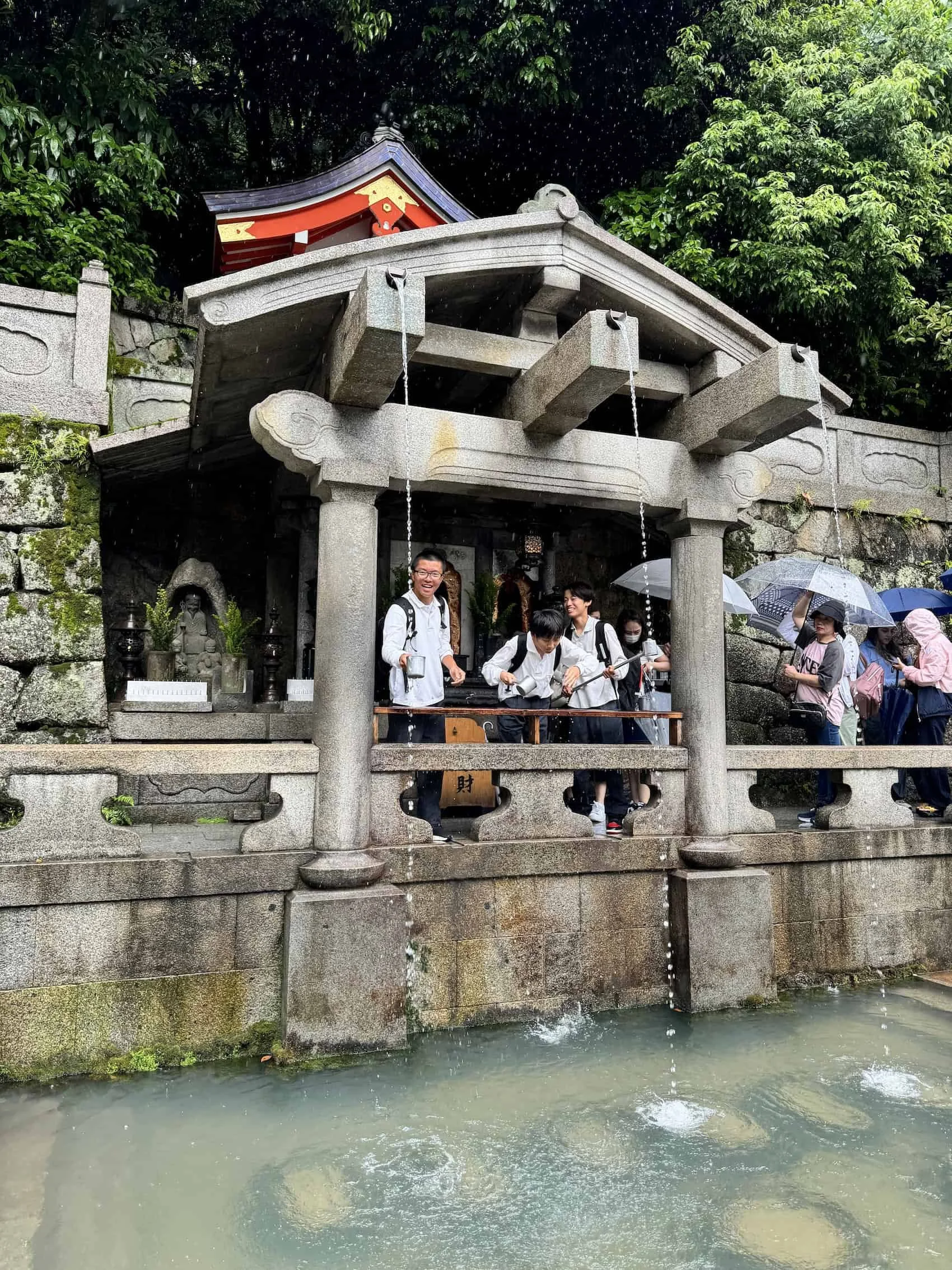
Upon saying goodbye to this incredible view, your guide will escort you to the final stop of the morning tour—an authentic Japanese tea ceremony where you’ll make matcha!
Tea Ceremony Nagomi
As the birthplace of the Japanese tea ceremony, Kyoto promises an unparalleled matcha-drinking experience—which in this case is offered by Tea Ceremony Nagomi. The bitter powder is sourced from Gion Tsujiri, a tea manufacturer with over 150 years in Kyoto, and due to its sharp taste Japanese sweets are provided alongside the beverage. These exclusive dry sweets come from Kiyomizu-dera and reflect the current blooming flora of the season—which in my case was green maple leaves!

-
Upon entering the tranquil atmosphere of the tatami-matted tea house, our English-speaking instructor began by providing a rich history of the ceremony, describing its origins and how the particular ritual techniques have evolved through the emergence of hundreds of tea schools. From there, each step of the traditional ceremony was demonstrated, with our instructor describing the reason for each precise movement and the underlying principles conveyed by her refined manners. At this point the student becomes the teacher, and each participant is invited to select their desired tea bowl before carefully pouring a cup of hot water in the manner that was previously demonstrated. Let me just say, our skilled instructor made this step look much easier than it actually was, since my fellow participants and I cringed as our scalding water made a sizzling sound when we accidentally let it drip down the side of the kettle. Once our cups were full, we used a bamboo tea whisk to rapidly turn the authentic dark powdered green tea into a frothy matcha drink!

Lunch - Ramen Sugichiyo
Although I was supposed to say goodbye to Hide, we talked so much about the warm bowl of ramen we were anticipating after the cold, wet tour that he stuck around and joined for lunch! After just coming over from Tokyo, we chatted about sumo culture, his study abroad experience in America, and any other questions about Japan we could think of.
I identified Ramen Sugichiyo with a quick Google search as our nearest option 15 minutes away, and as a long-time Kyoto native Hide agreed—so this place has the local stamp of approval!

Inside, find a simple menu with two ramen variations using a broth comprised of chicken and pork bone, back fat, and soy sauce. This ramen can be topped with additions like green onions and boiled eggs, while a few side dishes are available as well. From our sunken kotatsu table, we dug into fried rice alongside the ramen while feeling warmth re-enter our fingers and toes.
Nishiki Market
After lunch, I refused to let the rain spoil our first day in Kyoto—but after getting drenched for hours an indoor activity was a must. Luckily, the city boasts numerous covered shopping streets due to the occasionally inclement Kyoto weather, including the famed Nishiki Market with fresh seafood, more waygu than you can imagine, and a variety of pickled fruits and vegetables.
Known as "Kyoto's Kitchen," this 400-year old site is foodie heaven and will introduce you to local delicacies like yuba or tofu skin, kyo-yasai or natively grown heirloom vegetables, and tsukemono or Japanese pickles. This is the best place to experience authentic regional flavors unique to Kyoto, and friendly vendors will often allow you to sample goods before making a purchase. What began as a 17th century fish trade has evolved into a bustling food market, and today over 100 stalls sell an array of sweets, dried foods, and kitchenware.

Since I had already eaten—and visited an abundance of street food markets by this point—I focused our sights on the various souvenir and sweet shops scattered throughout the vibrant atmosphere. First was the Sugi Honey Shop, where I was drawn in by free samples of sugary honey concoctions blended with natural fruit juices.
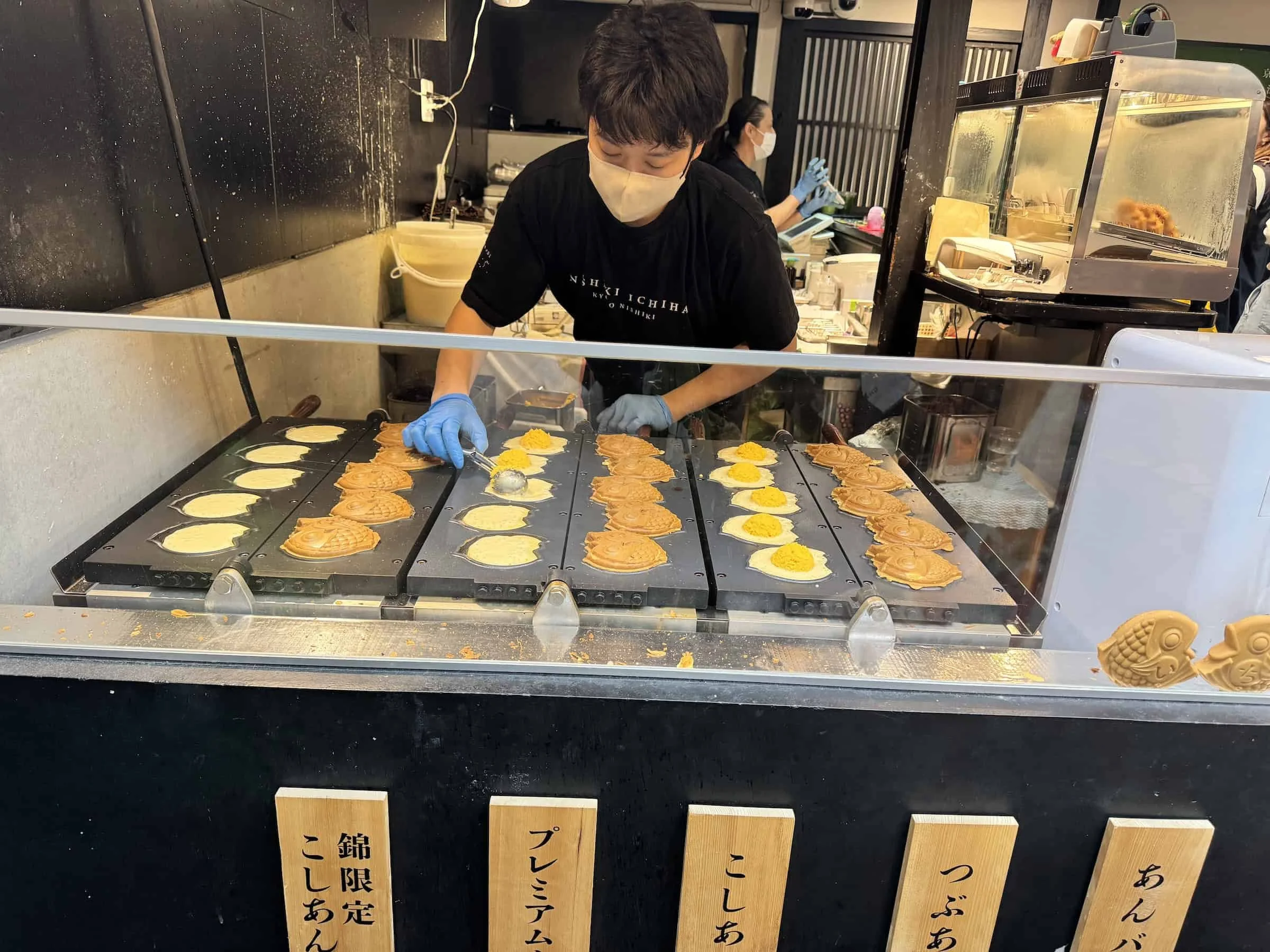
I was almost tempted to follow that up with their hive honey soft-serve, topped with a juicy piece of honeycomb, but instead satisfied my sweet tooth with taiyaki—fish-shaped waffles—from Nishiki Ichiha who sources these delicious sea creatures from Mamemono-to-Taiyaki, a popular sweets shop in Arashiyama.
To top off this culturally immersive afternoon, I popped into Kyonishiki Kanzashiya Wargo in search of kanzashi, or Japanese hair ornaments which function similarly to French twist hair pins. The kind employees were extremely knowledgeable about the usage of these hair fasteners and taught us how to create updos with only a single pin!



Samurai Kenbu Theater
I left Nishiki Market just in time walking 21 minutes to an interactive samurai school excursion, returning the way we came over the Kamo River to Gion.
Hosted at the Samurai Kenbu Theater, the evening began with a sword performance known as kenbu, or a traditional Japanese stage art utilizing katanas and folding fans to accompany poem voiceovers written by samurai. These performances provided feudal samurai warriors with courage and a focus point for their mental concentration prior to gearing up for battle.

-
The performance is broken up into smaller acts, with each subsequent session demonstrating graceful sword handling in successive displays of fencing techniques paired with delicate folding fans imitating natural elements.
While this was quite entertaining on its own, your appreciation for the performers’ tact will grow exponentially once it’s your turn to attempt vigorously drawing the long, heavy swords.
At this point most performance attendees exited the dojo, so I thought our experience was over too, but if you book via the Viator link below you’ll get to stay behind, suit up in a samurai costume of your choosing, and practice the art of kenbu!
The class length depends on the option selected when scheduling the excursion, with shorter sessions omitting lessons on how to walk the shuffled samurai way, represent natural phenomena with a folding fan, and more challenging katana choreography.
I had unknowingly booked the longer session, unsure what was in store as we geared up in a crested kimono, hakama, white belt, tenugui towel, Japanese-style socks, and of course a katana to mirror the outfits of the previous performers.
From there, we practiced basic techniques of these ancient Japanese warriors, learning the proper method to bow as well as the tricky technique behind drawing and replacing the sword from its protective scabbard without cutting ourselves!
Upon mastering these samurai skills, we moved on to more complex movements from striking the sword to learning how to wield it against potential opponents.
At the end of class, we demonstrated our proficiency in these sword training methods as the whole group ran through a fighting sequence together before taking a million photos in our samurai outfits and receiving a certificate affirming our new skills!

This was the most fun thing I did as one of the top cultural experiences in Kyoto for first-time visitors—I mean, who doesn’t want to dress up and swing a sword around—so I can’t recommend this activity and the highly-skilled kenbu swordsmen who led it enough!
Dinner - Sushiiwa Kyoto
FROM: Samurai Kenbu Theatre (Japan, 〒605-0005 Kyoto, Higashiyama Ward, Sanchome, 35-7 三条花見小路東入ル GOZANビル 地下1階)
TO: Sushiiwa Kyoto (Shimogyo Ward, Kyoto, 600-8155, Japan)
TRANSPORTATION: Sanjo Station → Shichijо̄ Station via Keihan Main Line Limited Express Yodoyabashi (4 min, 2 stops, ¥170)
I planned to enjoy another omakase dinner at Sushiiwa, one of the first sushi restaurants in Kyoto to provide counter seating, but was fished out and canceled the reservation in favor of Domino’s cheese pizza. Be more resilient than I and enjoy this seasonally curated meal, as the famous spot serves up incredibly fresh cuts with a coveted reputation and stellar reviews on TripAdvisor and Yelp.

Continuing today with a pioneering spirit, Sushiiwa curates rotating dishes which accentuate the flavor of natural ingredients used. They even consider the dinnerware depending on the time of year, changing from clay to glass plates in the summer to ensure the coolness of each bite.
-
Submit a reservation request on the website and then confirm your attendance in a follow-up email.
When submitting this request, choose between the ¥20,000, ¥25,000, ¥30,000, or ¥50,000 chef's recommended courses depending on budget, which does not include the 5% service charge and 10% consumption tax applied following the meal.
The difference in price determines the type and quality of fresh fish used, as the provided quantity of food is nearly the same but the parts of tuna served are quite different.
Alternatively, order from the à la carte menu, which recommends you provide an approximate budget per person.
Regardless of your selection, vegetarian, gluten-free, and ingredient-specific allergies can be accommodated within these traditional cooking techniques, as well as the serving of low-sodium and low-oil dishes.
Solaria Nishitetsu Onsen
FROM: Sushiiwa Kyoto (Shimogyo Ward, Kyoto, 600-8155, Japan)
TO: Solaria Nishitetsu Hotel Kyoto (Japan, 〒604-8001 Kyoto, Nakagyo Ward, 三条上る上大阪町509番地)
TRANSPORTATION: Kawaramachi Shomen → Kawaramachi Sanjo via 205, 5, or 7 City Bus lines (9 min, 4 stops, ¥230)
Return home after dinner—and if you’ve adhered to the brilliant travel advice above—then cap off the night with a relaxing soak in the steamy hotel onsen!
An onsen is a Japanese hot spring, notably different than hot tubs given they’re naturally heated by geothermal forces, prohibit the use of bathing suits in facilities separated by gender, and traditionally prohibit those with tattoos from entering. The imperative to enter the cleansing, mineral-rich water sans clothes means photos inside the baths aren’t allowed, but you can get a sense of our excitement from this flick taken in matching, hotel-provided pajamas beforehand!

The Solaria Nishitetsu Hotel has an indoor and outdoor rotenburo onsen, allowing you to soak with scenic views of a Zen garden while enjoying the therapeutic benefits of the communal bath. Follow traditional bathing etiquette before entering the onsen—which I’m calling out because I lacked this information and completed the steps in reverse! Cleanse and rinse yourself in the provided shower area before entering the hot water, rather then when you exit the tub.
Day 2
FROM: Solaria Nishitetsu Hotel Kyoto (Japan, 〒604-8001 Kyoto, Nakagyo Ward, 三条上る上大阪町509番地)
TO: Kinkaku-ji Temple (1 Kinkakujicho, Kita Ward, Kyoto, 603-8361, Japan)
TRANSPORTATION: taxi ride acquired via Uber or off the street (20 min, direct, ~¥2,500)
Kinkaku-ji Temple
Begin your second day during this 3 days in Kyoto itinerary bright and early —since you’ll want to visit Kinkaku-ji as soon as it opens at 9:00 AM to avoid massive crowds of schoolchildren! Known as the Golden Pavilion, the upper two floors of the reliquary hall are completely covered in gold leaf, creating a dazzling appearance and cementing it as one of the most visually striking buildings in Japan.
-
Reflecting Muromachi period architecture, each floor represents a different style—from the Shinden-zukuri, or palace style, of the first floor to the Bukke-zukuri, or samurai house style, of the second floor and finally the Karayō, or Chinese Zen hall style topping the third floor.
Originally built in 1397 as a retirement villa for the shogun Ashikaga Yoshimitsu, it was later converted into a Zen Buddhist temple by Muso Kokushi of the Rinzai sect, making it a subtemple along with Ginkaku-ji under Shokoku-ji, the main temple near the Kyoto Imperial Palace.
Unknown to many tourists, the true name of this temple is Rokuon-ji, coming from the Buddhist name Rokuon-inden given to the founder who was named after the place where Buddha first preached: Rokunoen.

Embodying the principles of Zen Buddhism, find the qualities of simplicity and tranquility conveyed through the natural beauty of the surrounding garden design, with meticulously maintained landscapes, reflective ponds and waterfalls, and stone pathways for meditative contemplation.
Entry costs ¥500, and once inside find the same prayer artifacts, collection boxes, and street food stands common to most popular temples in Japan.


Otagi Nenbutsu-ji Temple
FROM: Kinkaku-ji Temple (1 Kinkakujicho, Kita Ward, Kyoto, 603-8361, Japan)
TO: Otagi Nenbutsu-ji Temple (2-5 Sagatoriimoto Fukatanicho, Ukyo Ward, Kyoto, 616-8439, Japan)
TRANSPORTATION: taxi ride acquired via Uber or off the street (25 min, direct, ~¥4,000)
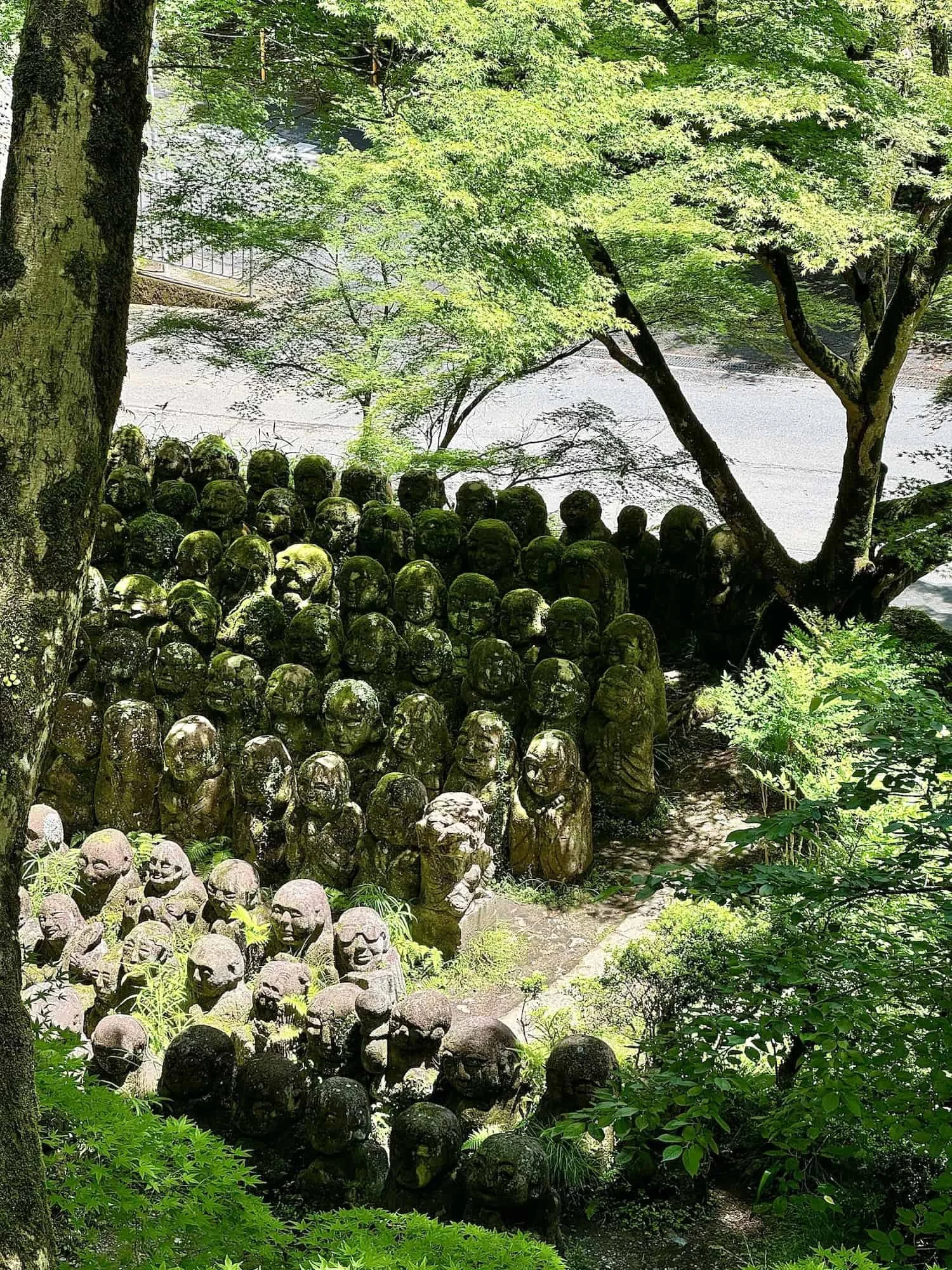
Head deeper into Arashiyama to the slopes of Mount Atago where Otagi Nenbutsu-ji Temple sits—this was undoubtedly my favorite temple in Japan as one of Kyoto's top hidden gems! Unlike the crowded chaos of more popular stops like Kinkaku-ji and Ginkaku-ji, this off-the-beaten-path attraction is the epitome of peaceful serenity. Enjoy the relaxing sounds of flowing water and chirping birds deep in the forest after spotting the most notable feature as soon as you arrive—1,200 moss-covered rakan statues, or followers of Buddah, covering the hillside.
-
Unlike most sacred artifacts crafted by skilled artisans, these sculptures were created by everyday travelers who made the pilgrimage to learn carving under the guidance of the temple chief, Kocho Nishimura.
No two expressive rakan are alike, with some serious personalities appearing deep in prayer while other jovial characters are smiling, laughing, or holding objects like a pet cat which hint at the amateur carvers’ interests.
Kocho, a statue sculptor and restorer who became a Buddhist monk himself, was appointed chief in 1955 after all previous temple variations—including the original structure built in central Higashiyama—were destroyed by natural disasters like typhoons and flooding from the Kamo River, making this Kyoto’s most often-ruined temple.
A 10-year period of artistic transformation followed in which reconstruction primarily involved the creation of these distinct, whimsical figures hiding within the stone.

This eclectic mix of Buddha disciples blends the earthly, humorous nature of art with sublime spirituality, making Otagi Nenbutsu-ji a truly unique site which represents a must see in Kyoto in 3 days attraction. Enter for the low fee of only ¥400!



Arashiyama Bamboo Forest
While Arashiyama is quite a ways from central Kyoto, since you taxied to distant Otagi Nenbutsu-ji reap the benefits this travel and simply walk downhill through the preserved village streets of car-free Saga-Toriimoto! This historic district is renowned for the traditional machiya, or townhouses, lining the road alongside other Meiji and Taisho structures.
Walk 30 minutes south to your lunch reservation—which is quite easy to follow since there’s only one main route. The journey will breeze by while admiring the natural beauty of serene gardens maintained in harmony with the traditional aesthetic here, which has been upheld to standards of historical integrity.

Stumble upon the lush Sagano bamboo forest which surrounds the Tenryu-ji Temple you’ll soon approach. The tall, ethereal forest is a testament to traditional Japanese landscaping and conservation practices aligned with Zen Buddhism, such as achieving peace and balance through nature while symbolizing strong resilience with the important element of bamboo.
-
When planning this trip, I saw numerous tours of the nearby Arashiyama Bamboo Forest going for anywherefrom $50-$100. After strolling through a comparable grove for free I can attest this is the way to go—that is, unless you’re a big monkey fan and plan to visit the Arashiyama Monkey Park Iwatayama too!
I am not and simply gazed upon these swaying stalks, which make a tranquil sound as gentle wind rustles their leaves that has been designated one of the "100 Soundscapes of Japan." Keep an eye out for rickshaws, in which a strong runner pulls guests on a human-powered covered cart.

Lunch - Shigetsu
Upon reaching the Tenryu-ji Temple, traverse through the main temple entrance to the garden entrance, where a ¥500 admission fee is required to access Shigetsu, Tenryu-ji’s Zen vegetarian restaurant. Follow posted signage in the garden to arrive at the tatami-matted temple-style restaurant, where a tranquil experience begins with the removal of outdoor shoes.

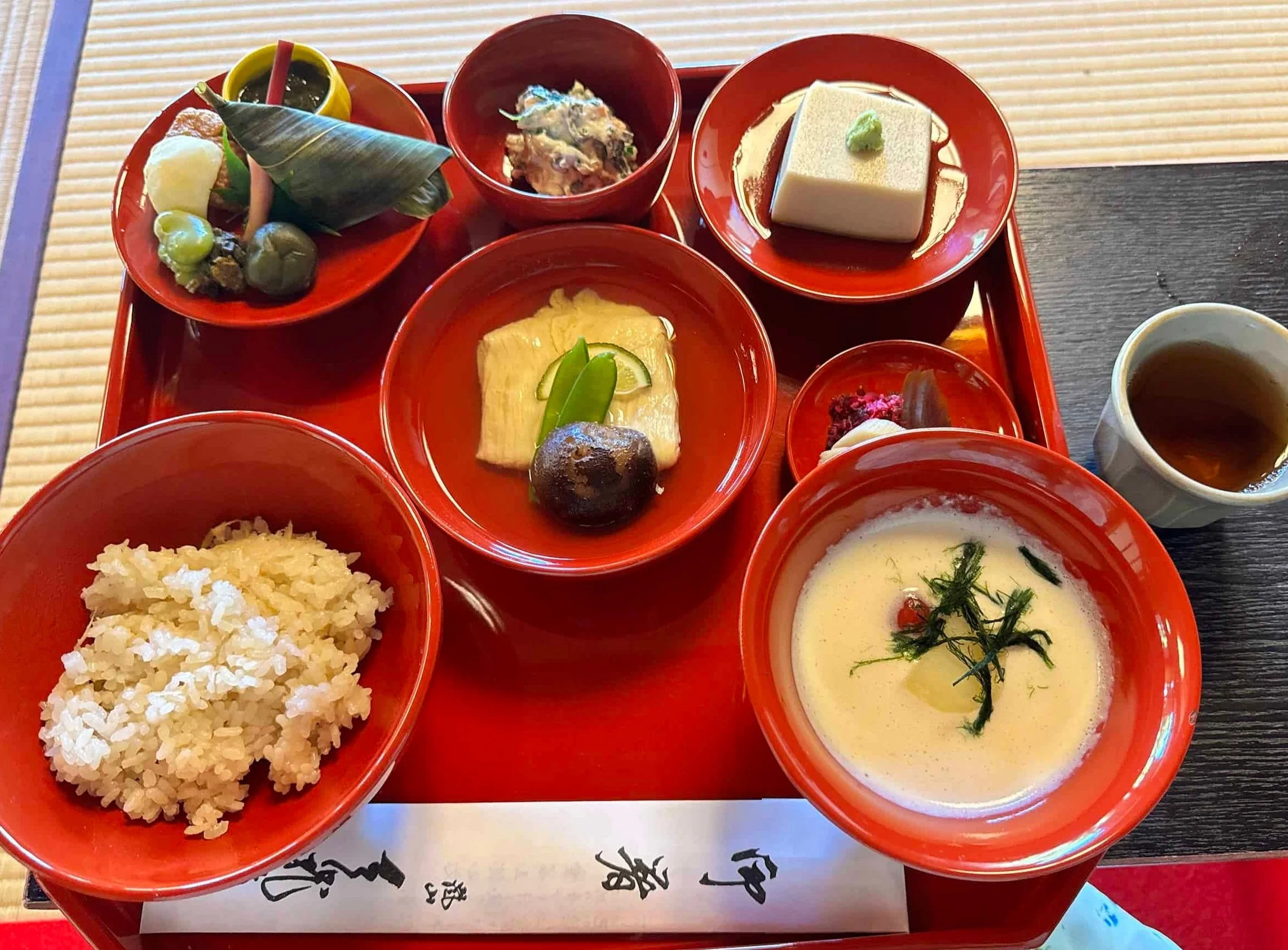
Try shojin ryori for lunch, brought to Japan alongside Zen teachings from China in the 13th century. This school of thought regards cooking and eating as spiritual practices rather than mundane aspects of everyday life. The cuisine entails nourishing meals comprised of fresh seasonal vegetables, herbs, and wild plants to sustain the body and mind without depriving animals of life.
-
I selected the mid-range tsuki, or moon offering encompassing rice, soup, and 6 side dishes for ¥6,500.
Since the menu changes seasonally, the specifics of each dish are not posted online, and to be honest I’m not entirely sure what I ate.
I’m generally adventurous in what I’m willing to eat, but as a meat-lover and generally adverse to vegetables—this was a tough meal to finish.
Nonetheless, I traveled to Japan to experience various aspects of their cuisine, and while this wasn’t my favorite cultural meal it doesn’t mean you won’t find the offering pleasant!
To try shojin ryori, make a reservation at least three days in advance. During my visit, the restaurant was completely booked, leading a guest attempting a walk-in to try and poach our table!
Tenryu-ji Temple
After finishing this vegetarian lunch, enjoy the natural beauty of Tenryu-ji's UNESCO World Heritage gardens while digesting since you already paid the entrance fee!
Another Rinzai Zen Buddhist temple, Tenryu-ji was founded in 1339 by shogun Ashikaga Takauji to honor the passing of Emperor Go-Daigo, while the picturesque gardens have remained largely unchanged since their creation were designed by Muso Soseki. Despite many of the original buildings being destroyed by fires over the centuries, the current Meiji structures continue to serve as studious places of practice for monks.

Traditional Japanese temple architecture is reflected in the Hojo—or main hall—which offers another garden viewpoint and the Kuri—or temple kitchen—while traditional landscape architecture is highlighted in the Sogen Pond Garden. This is the primary fixture to stroll around, a central pond is surrounded by rocks, pine trees, and the scenic Arashiyama mountains.
I was templed out at this point and didn’t explore beyond the gardens, but the complex includes several subtemples, halls, and other structures you may be able to access without paying the additional ¥300 building fee.



Gion District
FROM: Tenryu-ji Temple (Japan, 〒616-8385 Kyoto, Ukyo Ward, Sagatenryuji Susukinobabacho, 68)
TO: Gion (Higashiyama Ward, Kyoto, Japan)
TRANSPORTATION: taxi ride acquired via Uber or off the street (35 min, direct, ~¥4,150)
If you’re winding down by this point in the afternoon, now is the optimal time to rest. I however was determined to return to Gion since our first visit was treacherously rainy. Even if you had a sunny tour with MagicalTrip, it’s worthwhile to peruse the area at your own pace with time to stop and explore souvenir shops that peak your interest while experiencing Kyoto in three days.
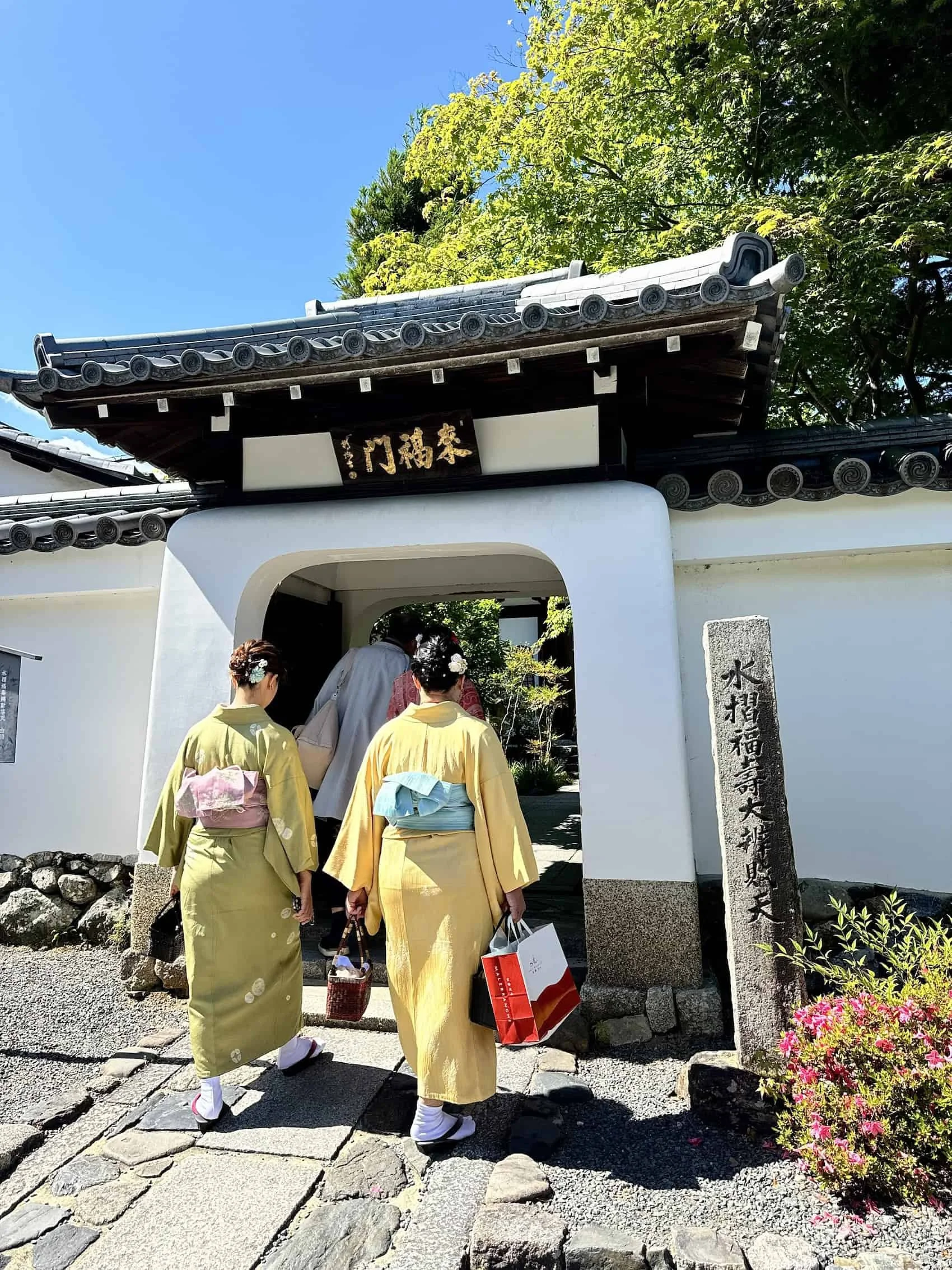
If you’re seeking another activity, Gion feels like the most appropriate placeto rent a kimono and get dolled up like the maiko and geiko who provide entertainment within this same district. As you likely noticed during the tour, Gion is renowned for traditional teahouses, geisha culture, and historic architecture.

If you’re in the mood to shop, peruse the stores lining Hanami-koji, Sannenzaka, and Ninenzaka.
To simply take in the traditional aesthetic of homes protected by wooden trellises and curved bamboo barriers in this hanamachi district, then the streets of Nene-no-michi, Shinbashi-dori, Ishibei-koji lane, and the romantic, cherry blossom-lined waterway of Shirakawa lane are better suited for your cup of tea.
For a picturesque photo with the Yasaka Pagoda in the background, Yasaka-dori has the best composition.
If you haven’t seen enough Buddhist temples yet, then Kōdai-ji is conveniently located just south of the Yasaka Shrine explored yesterday.

Gion Corner
Round out your evening with a traditional arts performance at Gion Corner. Offering 6:00 and 7:00 PM showings, over the course of 50 minutes see 7 small acts to experience first-hand Kyoto's entertainment district culture.
-
The theater stage is first graced with a Urasenke standing bow ceremony, which contrasts with Tea Ceremony Nagomi as the instructor remains seated on a chair. This introduction is accompanied by an Ikuta school performance of koto music and ikebana flower arrangement.
This combined showcase is followed by a kyogen act, entailing mimetic and often exaggerated comical theater portraying social situations of the Muromachi period it became popularized during.
Next is the bugaku piece "Ranryo-o,” one of the oldest continuously practiced dance forms in the world introduced from mainland China as a performance for select elites in the Japanese imperial court. Set to the tunes of Gagaku music—Japan's oldest classical music—the solo performer dons an intricate Buddhist costume with a mask.
Noh, another masked performance by the “shite” leading actor, is second to last and the "Hagoromo" musical drama combines narration, or utai, and musical composition, or hayashi. While the stage is quite simple, the luxurious costumes are crafted from Nishijin textiles.
Last but not least, a graceful kyomai dance performed by geisha and maiko in their beautiful authentic garb!

Standard, premium, and tea ceremony seatings are offered for ¥5,500, ¥6,600, and ¥6,050 respectively. Photography, videography, and audio recording is prohibited inside along with eating and drinking to be considerate of the performers. Late arrivals may be refused entry, so arrive with time to spare!
Dinner - Kyo Ramen Mitsuru
Craving another bowl of warm ramen after the delicious lunch the day before, I walked 8 minutes to the casual establishment Kyo Ramen Mitsuru and was quite pleased with the resulting meal! This establishment isn’t flashy or world-renowned, but for a quick and cheap meal it served its purpose perfectly—avoid a big meal tonight since you consume over 10 courses tomorrow!

-
I placed my order on a clickable screen, specifying he desired toppings and broth style from 9 variations before taking a seat at the restaurant counter.
I watched the diligent chefs prepare our scrumptious soup and noodles, and this ramen absolutely hit the spot once again!
I tried the nouko tori paitan ramen, or rich creamy soup with collagen, and if you’re feeling under the weather this tasted like the perfect chicken soup-adjacent dish to fix you right up!
Day 3
Kurama to Kibune Hike
FROM: Solaria Nishitetsu Hotel Kyoto (Japan, 〒604-8001 Kyoto, Nakagyo Ward, 三条上る上大阪町509番地)
TO: Kurama Station (Kuramakibunechō, Sakyo Ward, Kyoto, 601-1112, Japan)
TRANSPORTATION: Sanjo Station → Demachiyanagi Station via Limited Express Demachiyanagi Keihan Main Line and then → Kurama Station via Local Kurama Eizan Main Line (43 min, nonstop then 14 stops, ¥700)
Start your last morning of this 3 days in Kyoto itinerary bright and early, taking two trains from the city center deep into the mountain range flanking the north side of town.
Depart at Kurama station and immediately be greeted by the glaring red face of a Japanese devil statue—plus his extremely long red nose you won’t be able to miss! This sculpture marks the beginning of a ¥300 hike through Mt. Kurama, which passes more than 40 notable shrines and monuments on the way to the summit before winding down to Kibune, right outside Kibune-guchi station.

-
Prior to this experience, I wondered—is this really a hike or just a walk? With firsthand experience, it is most definitely a hike—albeit a paved one with handrails and hundreds if not thousands of steps—and I was huffing and puffing by the time we reached the top!
Start from Kurama versus heading up the other way, since 36 of the 41 total landmarks are located between that starting point and the peak.
It’s uphill the whole way to the sekurabe ishi midpoint, the stone where famous soldier Ushiwaka-maru measured his height at age 16. The scenic beauty of the surrounding landscape is breathtaking, and with each step you’re treated to better and better views of Kyoto below!
Following the 36th site of historical interest, the cedar forest mountain path weaves completely downhill. It’s brown and barren with a few small streams cutting—which is why you should start in Kurama, so you’re treated to interesting scenes during the taxing, uphill trek.
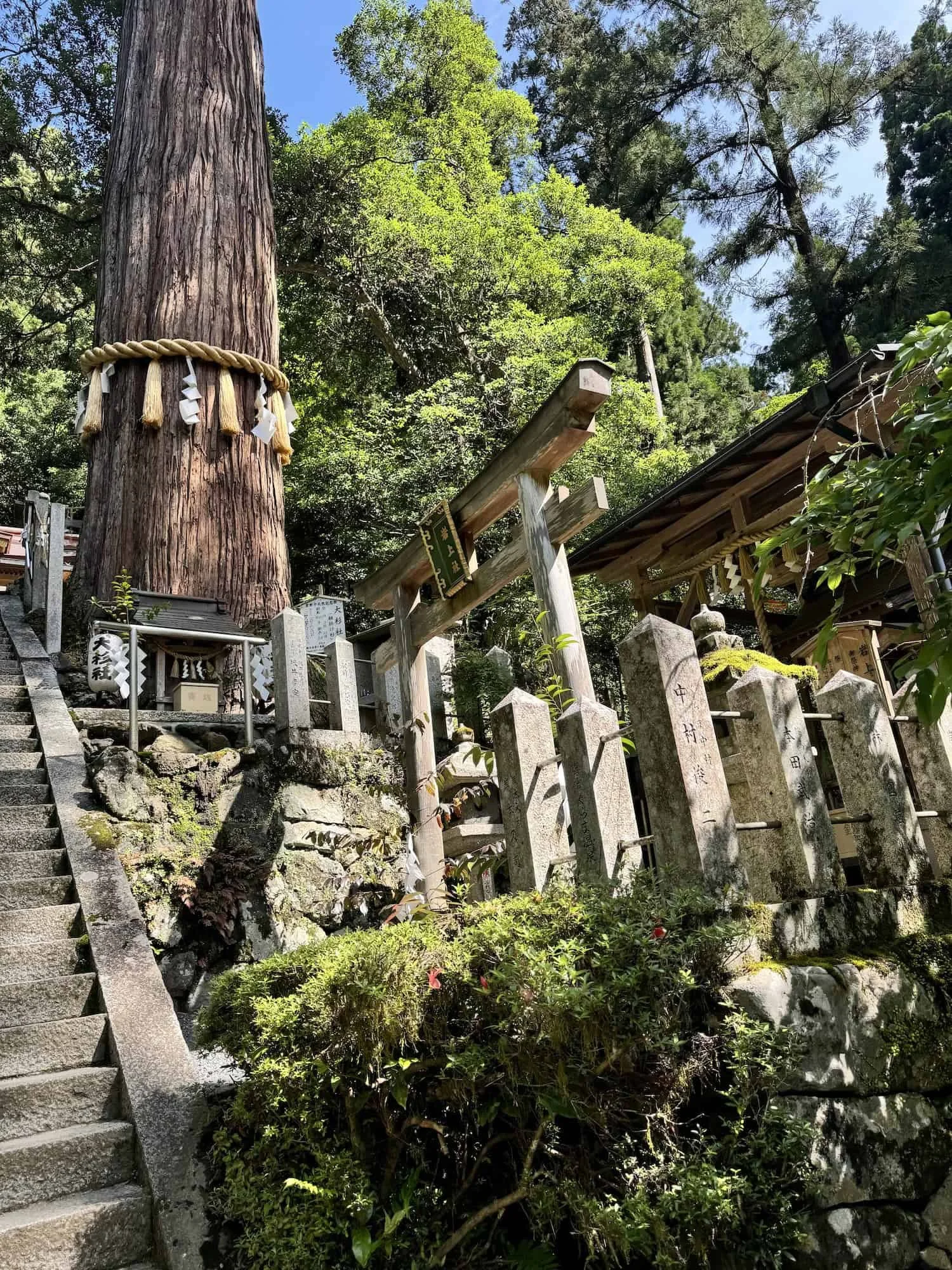
Kurama-dera, a historic Buddhist temple founded in 770 AD, is located about halfway up. Renowned fora serene atmosphere and significance in Japanese mythology, it’s associated with tengu—or supernatural beings—and esoteric practices.
During the descent pass Kifune, a Shinto shrine dedicated to the deity of water which imparts water blessings and allows worshippers to write wishes on wooden plaques, or ema.
While I was not thrilled about this 1.5 mile, 1 hour and 15 minute long hike when my friend proposed it, it ended up being one of my favorite memories as we traversed deep into the spiritually rich Mt. Kurama, free to explore every temple and shrine with leisure as there was practically no one else around! If you do one nature activity in Japan, the Kurama to Kibune hike in Kyoto should be it!



Ginkaku-ji Temple
FROM: Kibuneguchi Station (Kuramakibunecho, Sakyo Ward, Kyoto, 601-1112, Japan)
TO: Ginkaku-ji Temple (2 Ginkakujicho, Sakyo Ward, Kyoto, 606-8402, Japan)
TRANSPORTATION: Kibuneguchi Station → Takaragaike Station via Local Demachiyanagi Eizan Kurama Line and then → Ginkakuji-michi via 5, 7, or 204 City Bus (55 min, 8 stops then 9 stops, ¥640)
Following the hike, commute back into the city to enjoy a final day touring temples in Kyoto.
Ginkaku-ji, the Silver Pavilion, was influenced by the previously built Golden Pavilion of Kinkaku-ji and follows a similar storyline. Ashikaga Yoshimasa, the grandson of Kinkaku-ji’s imperial commissioner, built this temple in 1482 to serve as his retirement reprise, but evidently it was also converted to a Zen temple later on.
Unlike the obviously gold Kinkaku-ji, this pavilion is not covered in silver. Rather, its namesake comes from the silvery appearance of the roof shingles when viewed under the moonlight.

After paying ¥500, find remnants of Higashiyama culture—which flourished during the Muromachi period—emphasizing appreciation of traditional Japanese arts including tea ceremonies, flower arranging, Noh theater, and landscape gardening.
Similar to many of the temples described thus far, beautifully landscaped gardens surround the buildings, including a notable dry sand garden known as the "Sea of Silver Sand" and a meticulously maintained moss garden. These elements reflect Zen Buddhist principles, but they also pay homage to the idea of wabi-sabi, an aesthetic centered on the beauty of imperfection and transience.


Philosopher's Path
Just outside Ginkaku-ji find the Philosopher's Path, where philosopher Nishida Kitaro famously strolled during his daily meditation walks. Running alongside the clear waters of the Lake Biwa canal, advance under hundreds of cherry trees which bloom during spring into a breathtaking canopy of pink cherry blossoms.
Regardless of season, the path offers a tranquil and reflective environment, ideal for walking, contemplating, or simply enjoying nature. The serene ambiance is enhanced by the gentle flow of the canal and the lush greenery surrounding it. Starting from the northern end, follow the canal south to your next stop, Nanzen-ji, passing traditional Japanese gardens, tea houses, and local shops along the way.

Nanzen-ji is yet another important Rinzai Zen Buddhist temple in Japan. I didn’t actually pay to enter, instead sipping on Coca-Cola from a nearby vending machine and enjoying the peaceful scenery for free—which you can do as well to kill time before the next activity!
-
Founded in 1291 by Emperor Kameyama, this complex includes several significant structures such as the imposing Sanmon gate, the Abbot's Quarters, and various subtemples.
A physical representation of the three barriers to liberation—emptiness, formlessness, and creation—which Buddhist practitioners must overcome to attain enlightenment, you can climb the Sanmon gate for ¥500 to bear witness to panoramic views of Kyoto.
As an active site of Zen meditation, free reflective sessions are held on the 2nd and 4th Sundays of each month if you’d like to give the tranquil practice a try!
Otherwise, peruse the karesansui—or dry landscape—of the Hojo garden, notice the brick and mortar Meiji-era aqueduct running through the temple grounds, and admire the repository of artistic artifacts housed in the temple including, paintings, and calligraphy.

Lunch - Umemori Sushi School
FROM: Nanzen-ji Temple (86 Nanzenji Fukuchicho, Sakyo Ward, Kyoto, 606-8435, Japan)
TO: Kyoto Umemori Sushi School (8 Takeda Matsubayashicho, Fushimi Ward, Kyoto, 612-8371, Japan)
TRANSPORTATION: taxi ride acquired via Uber or off the street (28 min, direct, ~¥5,000)
For lunch while seeing Kyoto in three days, experience first-hand the art of preparing the most famous Japanese cuisine enjoyed around the world—sushi! In this authentic sushi making class offered by the Umemori Sushi School, an English-speaking instructor patiently guides you through the steps of crafting delicious nigiri and temaki.

-
Using the same fresh fish served in first class flights aboard Japan Airlines, begin the interactive session by transforming a bowl of plain white rice into sushi rice using a special vinegar concoction.
From there, your host will have lots of fun bringing out the fish and guiding you step-by-step through the assembly process —from measuring out the correct weight of rice and molding it, to placing a dab of wasabi in the middle, and finally adding fish on top with the harmonious chant of “Lasha!” sang in unison by your fellow group of students.
This all occurs after donning a colorful chef’s apron, and the final step relies on your creative ingenuity to top each delicious morsel however you see fit!
Edible flowers, gold leaf, miso crumble, and so much more is available to decorate your masterfully assembled nigiri plate.
Once you’re satisfied with how everything looks, dig into the sushi you made—for better or for worse, since some sneaky pieces may pack a punch with larger wasabi dabs than intended—for lunch alongside a big bowl of udon and a cup of green tea.
Take home a handful of souvenirs (besides a full belly), including a framed photograph with your sushi plate, a nigiri key chain, and a sushi making certificate to commemorate the experience!

Fushimi Inari Taisha
FROM: Kyoto Umemori Sushi School (8 Takeda Matsubayashicho, Fushimi Ward, Kyoto, 612-8371, Japan)
TO: Fushimi Inari Taisha (68 Fukakusa Yabunouchicho, Fushimi Ward, Kyoto, 612-0882, Japan)
TRANSPORTATION: taxi ride acquired via Uber or off the street (15 min, direct, ~¥1,750)
The final shrine stop in Kyoto is a location you’ve definitely seen photographed before: Fushimi Inari-taisha with its famed vermilion red torii gate tunnel! The head shrine of the kami Inari—the Shinto god of rice, agriculture, and industry—this association with prosperity and commercial success makes the site a popular destination for business owners seeking blessings for their ventures.
Founded in 711 AD, Fushimi Inari is one of the oldest Shinto shrines in Japan and features numerous stone fox statues, since kitsune are considered messengers of Inari with keys to the rice granary in their mouths.

The grounds include a network of trails leading to the summit of Mount Inari, lined with 10,000 bright red torii gates known as Senbon Torii, with each bearing the name of a donor. Walking through these tunnels is a visually stunning experience which attracts thousands of visitors and makes for the perfect Instagram shot —that is, if you can find a segment without crowds. Along the way to the top, explore smaller shrines, enjoy scenic views of Kyoto, and experience the natural beauty of the densely forested mountain for free!
-
The beginning of this trail is a traffic jam, with gates tightly packing the crowd of people inside them together.
If you follow this slowly moving mob, it will take quite some time to reach a break in the crowd.
I skipped this hassle altogether by following two swift schoolchildren who slipped through an opening in the gates and followed a dirt path running alongside the tunnel.
Following this shortcut for a few minutes, the path looks like it will divert away from the torii gates but instead a staircase appears leading back to an opening where you can re-enter the experience without being cramped amongst hundreds of people.
Most visitors don’t walk very far into the scenic trails, so skipping the entry point and speeding through the first section of gates alongside the main path the best way to go—and how I captured the photos seen here!


Dinner - Yoshikawa Inn
FROM: Fushimi Inari Taisha (68 Fukakusa Yabunouchicho, Fushimi Ward, Kyoto, 612-0882, Japan)
TO: Yoshikawa Inn (Japan, 〒604-8093 Kyoto, Nakagyo Ward, 下ル 富小路通り)
TRANSPORTATION: Fushimi-Inari Station → Sanjo Station via Semi-Express Demachiyanagi Keihan Main Line (28 min, 6 stops, ¥220)
Assuming you stay at the Yoshikawa Inn during this final night in Kyoto, a traditional tempura kaiseki dinner will be included in your nightly rate! Kaiseki refers to a traditional multi-course dining experience showcasing a variety of small, artfully presented dishes, otherwise considered the pinnacle of Japanese haute cuisine! The Yoshikawa Inn did not disappoint, and to be honest I was quite stunned by the amount of food that came through the door!

-
Seated at a Western-style table in a different room than where I slept or ate breakfast the next day, we began with a starter of seaweed noodles with sea urchin and tofu.
Each of the 10 courses was individually spaced out, so the dinner lasted 2 hours and 30 minutes as we enjoyed an assorted seasonal side dish, clear soup with a fried fish ball, bonito sashimi with sliced onion, and grilled eel and eggplant before the main attraction—tempura!
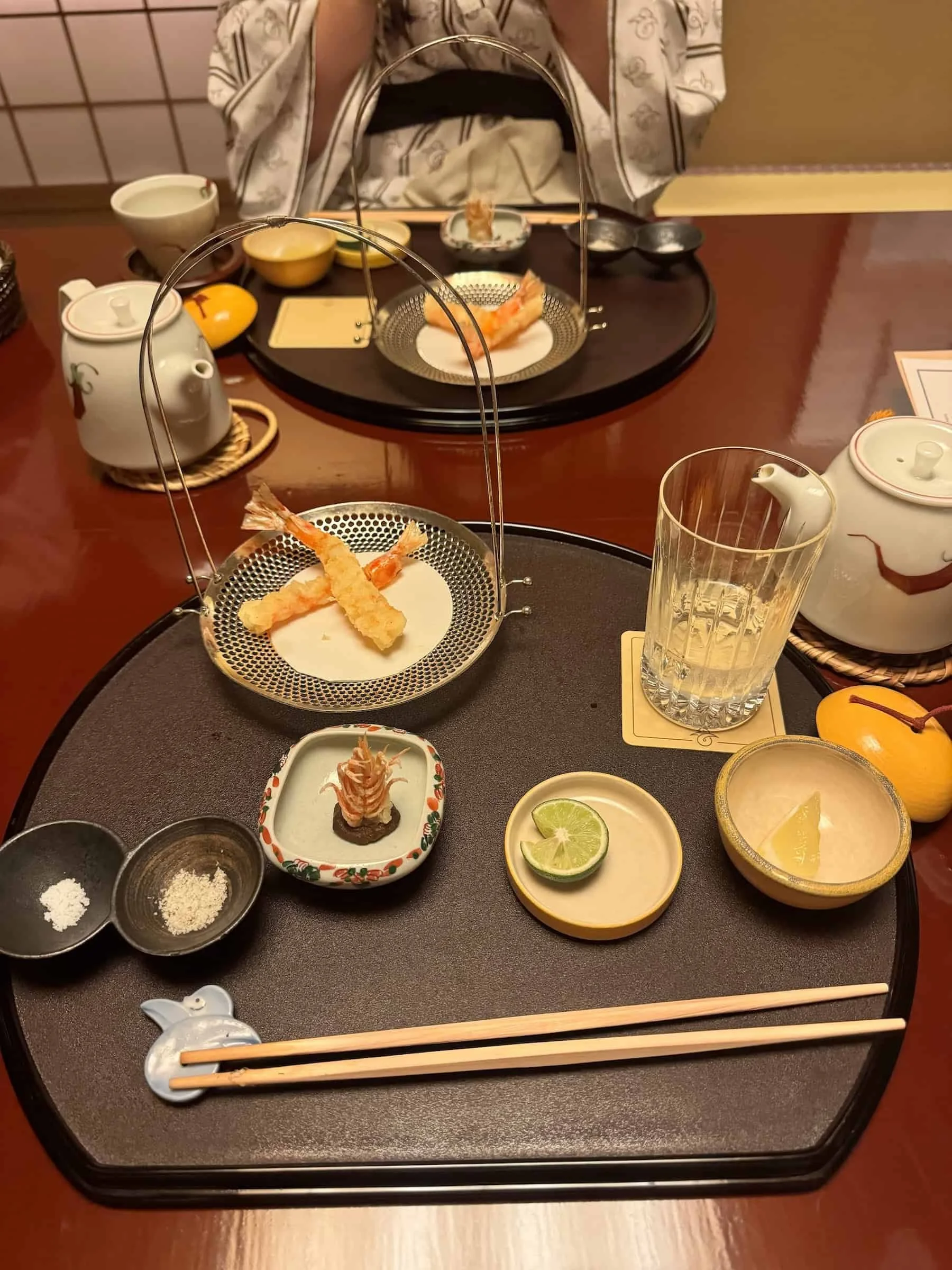
The tempura course could have been its own dinner and I would’ve been completely satisfied, as 10 fried and battered items were presented including: shrimp, eggplant, ginger, asparagus, baby corn, turban shell, Ayu lake-fish, lily bulb, taro potato, and wheat gluten.
Nearly all of these options also came with a specific dipping sauce or topping to pair with the ingredient, so it was quite the interactive dinner!
The fried shrimp was undoubtedly my favorite dish during this course, since the full Ayu fish (as in the entire animal, head and tail) gave me a bit of a scare and I couldn’t finish it after taking a bite from each end.
Nonetheless, I persevered and finished the horse mackerel refreshment dish, rice bowl with mixed tempura, and mango pound cake with assorted fruit for dessert!
After the filling tempura course I couldn’t even finish the last dish —so in retrospect I would advise eating very little prior to dinner, otherwise you likely won’t be able to finish every bite!



How Much Do Three Days in Kyoto Cost?
Following the above 3 days in Kyoto itinerary ideas totaled $1,460.11, costing me $486.70 per day as a recent graduate:
Transportation
$12.76 - taxi from Shinjuku hotel to Tokyo station, split among two people
$171.18 - round trip bullet train tickets from Tokyo to Kyoto
$12.45 - taxi ride to Kyoto Umemori Sushi School, split among two people
$67.36 - all other taxi, subway, and train rides detailed above
Food and Drink
$7.02 - ramen and half a bowl of fried rice from Ramen Sugichiyo
$5.43 - Coca-Cola and snacks from Family Mart
$22.53 - Domino’s cheese pizza (instead of dinner at Sushiiwa)
$5.91 - iced caramel macchiato and hot dog from Starbucks
$7.66 - ramen dinner from Kyo Ramen Mitsuru
$3.83 - coffee during walk to Tenryu-ji Temple from Harry’s Coffee Stand
$56.59 - shojin ryori from Shigetsu
$3.90 - train station coffee and waffle from Doutor
$112.60 - nigiri and udon lunch following sushi making at Kyoto Umemori Sushi School
Activities
$88.41 - Kiyomizu-dera Temple walking tour and matcha from Tea Ceremony Nagomi
$84.85 - samurai class at Samurai Kenbu Theater
¥500 - Kinkaku-ji Temple entry fee
¥400 - Otagi Nenbutsu-ji Temple entry fee
¥500 - Tenryu-ji Temple garden entry fee
$35.48 - standard seating entry ticket to Gion Corner
¥300 - Mt. Kurama hike entry fee
¥500 - Ginkaku-ji Temple entry fee
Souvenirs
$95.54 - Contender Countryside Peach Bloom Sneakers from Mizuno
$15.48 - incense and floral holder from Koju on Ninenzaka in Gion
$27.43 - vintage black velvet Japanese vest with shiny floral print and diamond buttons from Roger’s
$31.62 - pink floral kimono from Golden Triangle
Lodging
$147.76 - two nights in the Solaria Nishitetsu Hotel Kyoto Premier, split among two people
$430.52 - one night, kaiseki dinner, and breakfast in the Yoshikawa Inn, split among two people
Prior to planning this trip, my best friend and I decided this was without a doubt a splurge trip—and we were going to do every possible activity we could fit into our itinerary! While that worked for us, you may need to be more cost conscious, and if I were in your shoes I’d cut out the shojin ryori lunch and sushi making class from the above itinerary. We hardly ate the vegetarian meal which made it a bit of a waste, and the sushi class was a bit expensive considering we could have had a high-quality omakase dinner for less.
Default to public transit whenever possible on a tighter budget, and explore other ryokans besides the Yoshikawa Inn—which was absolutely divine—but evidently the most substantial expense as one of the many luxury ryokan accommodations in central Kyoto Japan.
If you’ have room to splurge, add in a ninja training class and account for the Sushiiwa dinner expense. You’re almost guaranteed to spend more on souvenirs than I did, since I held back tremendously and there were so many instances where I could’ve bought more. Assuming you appreciate the finer things in life, be prepared to drop a handful of cash on a hand-painted fan, silk kimono, vintage sake, or other luxuries that you may as well buy if you’re already in Japan!
What to Wear in Kyoto?
Traveling back in time to historic Kyoto encourages clothing to reflect the traditional aesthetic. Like geishas floating down Gion, convey more modesty with long dresses and floral prints that make you look like a blooming cherry blossom tree! While you could wear traditional American clothing—or really anywhere you travel—it’s much more exciting to embrace the environment around you and don dresses akin to long flowing kimonos.
Since you’ll enter a host of spiritual sites, I would advise reflecting on your attire as if it was viewed by a Buddhist monk—which it might be! Perhaps save the crop tops and streetwear for Tokyo. Embrace countryside kawaii cuteness with girly details like puffy sleeves; you will be doing a lot of walking too, so don’t be afraid to rock a pair of pastel sneakers while you’re at it. Speaking of color schemes, Japanese residents favor neutral colors, so if you’re undecided on what to wear you can’t go wrong with minimalistic black and white pieces! Incorporate the following elements to craft stylish and practical outfits for exploring Kyoto Japan:
Puff Sleeves
lean into your demure side with puffy balloon sleeves that radiate romantic princess charm



Modest Maxis
respect the integrity of the spiritual shrines you’ll visit with modest maxis that still allow for a girly moment


Floral Fabrics
exude kawaii cuteness in floral fabrics reminiscent of blooming cherry blossom trees



Maiden Skirts
long tiered skirts add to the countryside aesthetic that makes you look straight out of Miyazaki’s The Wind Rises


Simple Black Slip
neutral colors reign supreme here, and you can’t go wrong with a simple black dress on a summer day!


Stylish Sneakers
a sneaker moment in Japan is always a yes since their street-style is unmatched — you’ll be walking all day as is!


Discover where I purchased my pictured pieces with curated Kyoto summer outfit inspiration to help you pack your own hanamachi travel wardrobe!
Should Kyoto be at the Top of Your Travel Bucket List?
“YES!” I shout from the top of Mount Kurama —Kyoto is nearly the most magical place I’ve ever visited (second only to my two days in Lauterbrunnen, Switzerland).
I truly cannot capture the beauty of the city in words, or even more importantly, how calm and content it will make you feel. Kyoto treated me to some of the most unique activities I’ve ever had the pleasure of participating in—from wielding a katana sword to walking under thousands of red torii gates to hiking a mountain that just so happens to have 40 shrines on it!
The best part is that each of these experiences is truly authentic to historical Japanese practices, as the residents take great pride in honoring and preserving the ways of the past with a noble dedication I have yet to see replicated anywhere else in the world.
I’m convinced everyone needs to experience the magic of Kyoto at least once in their lifetime—moreso than Tokyo or Osaka—and if you’re even slightly into anime this destination will sparkle in your eyes with an even greater vibrance.
I’m so inspired by this city that I want to return and visit at least once during each season, so I can bear witness to the miracle that is the blooming cherry blossom spring and the vibrant warm-hued hillsides of autumn.
While strolling through Arashiyama I started plotting how to acquire a vacation home here, and I’ve already locked down a rejuvenating Kyoto trip as a must following the birth of any children.
Needless to say, only 72 hours here has already convinced me to center any future major life events around returning to this idyllic flower town, and there’s really no more I can convey so that you’ll fully understand—you just need to make the trip here yourself and I guarantee you’ll see what I mean!
✺ TRAVEL TOOLS ✺
Kyoto Customized Map (Google Maps)
✺ ABOUT ME ✺

Hi, I’m Ashley. I’m determined to see the world. All of it. Are you coming with?
While I respect the digital nomads, van life, and the hardcore backpackers—that’s just not me.
I’m convinced I can travel and keep my job.
It’ll take a lifetime, but I’m going to make it to all 195 countries before my time is up—and I’m taking you along for the ride!
✺ READ MORE ON THE BLOG ✺




![How to Drive Moonview Highway IRL: Mario Kart Japan [2025]](https://images.squarespace-cdn.com/content/v1/652732149424c20baf5e26c9/1738472940390-H4PXMWODU3MAQVIIOJ8I/IMG_1412+copy+%281%29.jpg)


![Tokyo’s Top Sites – How to Buy Shibuya Sky Tickets [2025]](https://images.squarespace-cdn.com/content/v1/652732149424c20baf5e26c9/1736655941250-HONDE4J7JOOEN5NJNNLJ/IMG_8461+copy+%281%29.JPG)



Mykonos, Greece